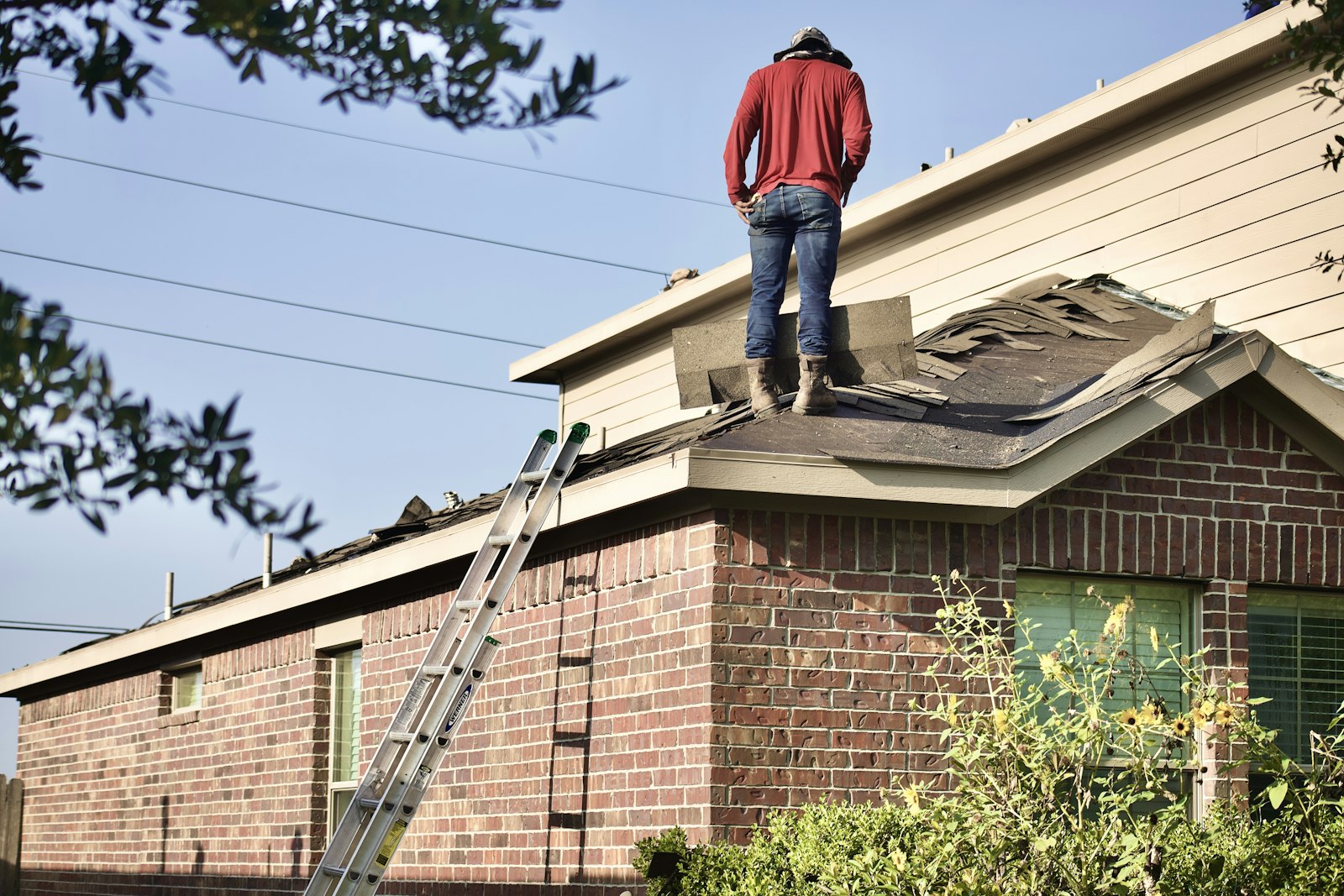
What does a roof inspection include, and how often should a Frisco homeowner actually get one? Both questions usually surface right after a hailstorm. The honest answer is that a proper roof inspection is a structured walk through a fixed checklist, from the shingle surface down to the decking seen from the attic, and that the right schedule depends less on the calendar than on what the sky has done since the last look.
Below, the questions are taken in the order people ask them: what gets checked, what it reveals, and when to book.
Key Takeaways
- A roof inspection checks the roof covering, flashing, penetrations, valleys, gutters and drainage, and the decking, framing and ventilation visible from the attic.
- Texas real estate inspectors must inspect the roof covering from the roof surface when it is safe to do so, and must note where they inspected it from.
- Plan on at least one roof inspection a year, plus a look after any hail or high-wind event that hits your part of Frisco.
- Buying or selling a home is its own trigger, because a general home inspection is not the same depth as a dedicated roof inspection.
- Newer Frisco roofs still need checking: installation details and early storm hits show up long before a roof reaches old age.
What does a roof inspection actually include?
A roof inspection is a visual, hands-on review of every layer that keeps water out of the house. It has two halves: the exterior the weather hits, and the attic the weather would reach if the exterior failed. Skipping either is how leaks get missed, because water often enters at one point and stains the ceiling feet away.
Texas gives a useful benchmark. The state's standards of practice for licensed real estate inspectors, 22 Texas Administrative Code §535.228, require the inspector to report deficiencies in fasteners, adhesion, roof covering materials, flashing details, skylights and other roof penetrations. The same rule covers roof structures and attics, including deflections in the roof surface, framing and decking problems, attic ventilation that is not performing, and evidence of water penetration. A dedicated roofing inspection should meet that bar at minimum.
What gets checked on the shingles themselves?
The shingle check looks for anything that reduces the roof covering's ability to shed water or stay attached. On the asphalt shingle roofs common across Frisco subdivisions, that means a slope-by-slope look at the following:
- Granule loss, which exposes the asphalt to sunlight and shows up as dark, shiny patches.
- Hail bruising: soft spots where the mat underneath has fractured, scattered across slopes that faced the storm.
- Creased, lifted or missing tabs, the usual signature of wind along rakes and ridges.
- Exposed or backed-out nails and tabs that never sealed.
- Cracking, curling and blistering, which point to age, heat and ventilation problems rather than a single event.
Why do flashing, penetrations and valleys get so much attention?
Flashing, penetrations and valleys get the most attention because joints, edges and holes are where water finds its way in. A field of shingles sheds water well on its own; the details depend on how carefully they were installed.
Flashing is the metal at walls, chimneys and roof-to-wall transitions. An inspector checks that it is present, lapped correctly, sealed and not pulled loose. Penetrations include plumbing vent pipes, exhaust vents, attic ventilators and skylights; their rubber boots crack in the Texas sun well before the shingles around them wear out, and a split boot lets water run straight down the pipe into the attic. Valleys, where two slopes meet, carry more water than any other part of the roof, so wear, debris or a gap in the lining matters most there.
What about gutters, drainage and the roof edge?
Gutters and drainage are part of the roof inspection because a roof that cannot drain will eventually leak, rot its edges or send water against the foundation. The inspector checks that gutters are firmly attached, sloped toward downspouts and clear, and that downspouts discharge away from the house.
The roof edge gets its own look: soft or stained fascia boards usually mean water has been overflowing for a while, and gutters full of granules are an early sign the shingle surface is wearing. Gutter problems are usually a separate job; our gutters and downspouts service covers that work.
What can the attic and decking tell an inspector?
The attic shows the underside of the roof, where decking problems, slow leaks and ventilation failures appear long before they reach the ceiling. An inspector looks for water stains on decking and rafters, daylight where there should be none, sagging sheathing and nails that missed the framing.
Ventilation matters in a North Texas summer, because an attic that cannot exhaust heat bakes the shingles from underneath. Warning signs include blocked soffit vents, rust on nail tips and insulation pushed against the deck. The Texas rule linked above treats attic ventilation that is not performing as a reportable deficiency.
Not every attic is reachable. The state rule does not require an inspector to enter an attic with an opening smaller than 22 by 30 inches or less than 30 inches of headroom, so a good report says where the attic was viewed from and what could not be seen.
Is a home inspection the same as a roof inspection?
A home inspection covers the roof, but not always to the depth of a dedicated roof inspection. Under the Texas rule, a licensed inspector must inspect the roof covering from the roof surface, but is not required to do so if the roof cannot be safely reached or walking it could damage the covering. In that case the report must state the vantage point, such as from the ground, a ladder at the eaves or binoculars.
That flexibility makes sense for a general inspector covering a whole house in one visit, but it means a buyer can receive a report on a steep two-story roof that was viewed only from below. When a report notes a limited vantage point, or flags granule loss, hail marks or damaged flashing, a dedicated roof inspection is the logical next step before the option period ends.
How often should a roof be inspected in Frisco?
Most homes should have a roof inspection at least once a year, plus a check after any significant storm. The Texas State Office of Risk Management recommends, for state-insured buildings, that each roof be inspected at least once per year, that roofs be checked before and after severe weather warnings, and that roofs with greater-than-typical exposure be inspected more often. The same logic suits a house.
In practice, the triggers that should prompt a Frisco homeowner to book an inspection are:
- Once a year, ideally before the spring storm season, so there is a baseline to compare against later.
- After any hailstorm or high-wind event that hit your neighborhood, even if nothing looks wrong from the ground.
- Before listing a home for sale, or during the option period when buying one.
- When a ceiling stain, attic drip or shingle in the yard appears; our roof repair page covers what follows.
Why does storm history change the schedule here?
Storm history changes the schedule because hail damage often does not show from the ground, and a missed bruise becomes a leak months later. Frisco sits in a part of North Texas that sees large hail. On April 3, 2014, the National Weather Service in Fort Worth logged hail of roughly 1.5 to 2 inches in Frisco during a storm that also produced hail as large as softballs in Denton.
The same NWS summary lists some Frisco reports under Denton County, a reminder that the city spans both Collin and Denton counties, so western Frisco households should watch Denton County warnings as closely as Collin County ones. Any storm reported near your address is an inspection trigger; the storm and hail damage roof repair page explains how documented damage is handled.
Do newer Frisco homes really need roof inspections?
Yes. A newer roof skips the age-related problems but not the installation or storm-related ones. Frisco has added housing at a pace few Texas cities match: the U.S. Census Bureau counted 200,509 residents in 2020 and estimated 236,955 by mid-2025. A large share of local roofs are therefore on their first life.
On a newer roof, the inspection looks for problems that were built in: poorly placed nails, missing kickout flashing at wall transitions, unsealed pipe boots and under-ventilated attics. Catching them early matters, because warranties usually carry time limits and conditions. In older subdivisions, the focus shifts to replacement roofs, earlier patch work and roofs that have weathered several hail seasons.
Making the next inspection count
Use this checklist as the standard any inspection should meet. Ask where the roof was viewed from, whether the attic was entered, and whether each slope, valley and penetration was examined and photographed. A report that answers those questions becomes the baseline you compare against after the next storm, and it turns a vague worry into a short list of specific items.
For a Frisco home, the simplest rhythm is a baseline inspection before storm season and a follow-up after any hail near your address. If you want that baseline done properly, Roofing Frisco Texas offers roof inspections across Frisco with photographs and a written report, and you can see the full range of work on our homepage.