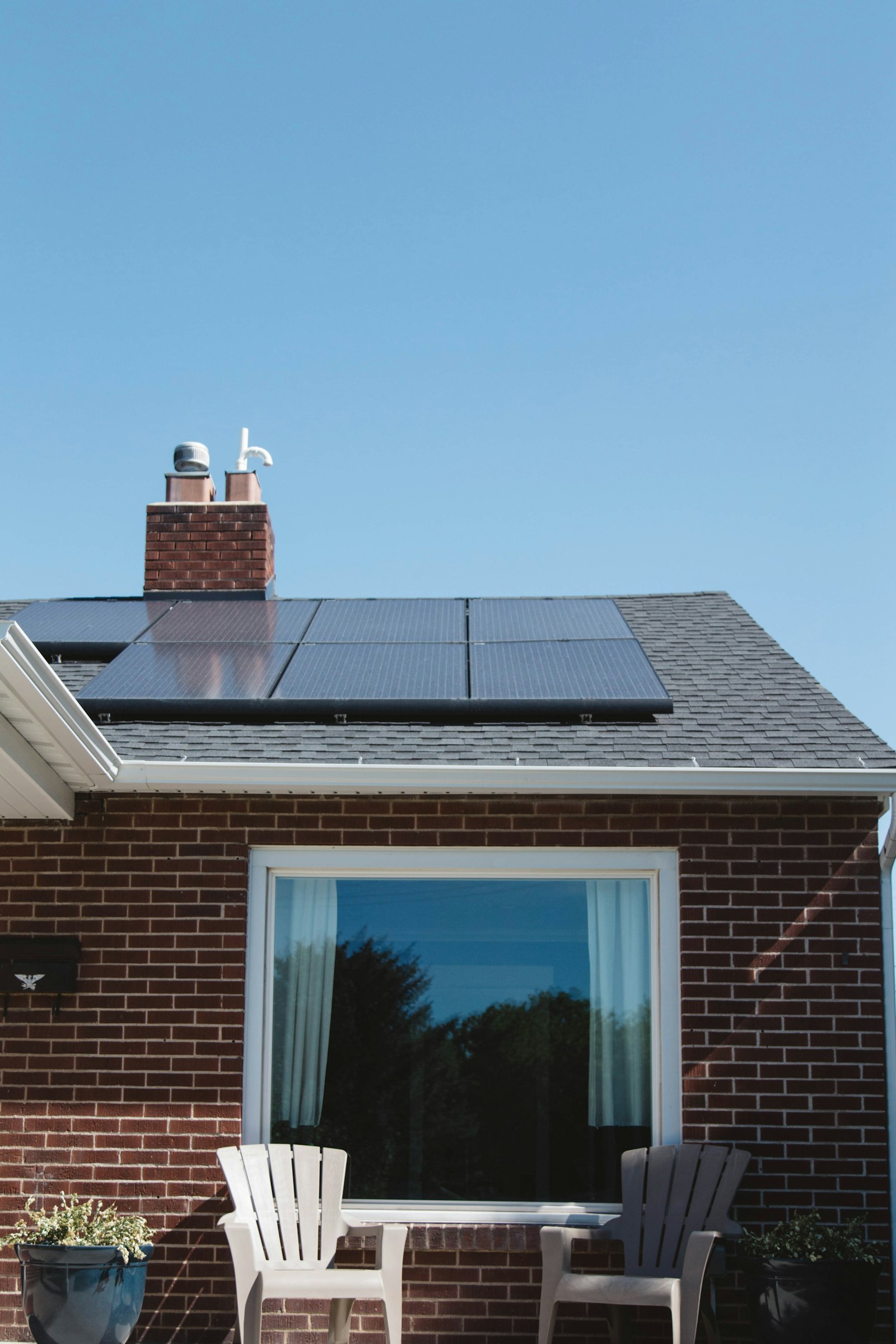
You have a solar quote on the kitchen table, the installer has looked at your satellite photos, and the question nobody on the sales call quite answered is still sitting there: does the roof under those panels need replacing first? On a lot of Frisco homes the honest answer is yes, and on plenty of others it is a clear no. What decides it is not the solar company's preference or the roofer's, but a few facts about the roof you already have.
Panels Are Built to Outlast Most Aging Shingle Roofs
The starting point is a simple mismatch in lifespans. The U.S. Department of Energy puts it plainly: solar panels last about 25-30 years, which it describes as similar to the lifetime of a roof, and it gives a replacement roof a range of 20 to 50 years depending on the materials used. A new array bolted onto a roof that is already halfway through its life will almost certainly still be producing power when the shingles underneath it give out.
Production does not stop at the warranty date, either. NREL's state and local technical assistance team notes that panels have a median degradation rate of about 0.5% per year, that modules are typically warrantied for 20-25 years, and that there are no end-dates as such on a panel's productive life. So the array will usually be worth keeping long after the shingles under it are not.
Shingles Past Their Midpoint Usually Mean Replace First
A roof that is well past the middle of its expected life is the clearest case for replacing before solar. One major shingle manufacturer is specific about this. GAF's technical bulletin on installing PV over its shingles says the company recommends that shingles under a solar array be less than 5 years old for optimal longevity, on the reasoning that most PV arrays can last 20 or more years.
Five years is a manufacturer's ideal rather than a legal line, and a sound ten-year-old roof is not automatically disqualified. But the logic runs one way. The older the shingles, the more likely the roof will need replacing while the array still has many productive years left, and the more likely you will pay to have the system taken down and put back up to do it.
Condition Matters More Than the Calendar
Age is a shortcut for condition, and condition is what actually decides it. A twelve-year-old roof that has been through a couple of hard North Texas hail seasons can be in worse shape than an eighteen-year-old one that has been sheltered and maintained. Before solar goes on, the roof surface that will be hidden for decades should be looked at closely, not judged from the street.
The things worth checking under the planned array are the ones that are hardest to fix once panels cover them:
- Granule loss, exposed mat, and shingles that have lost their seal or started to curl.
- Hail bruising and soft spots that may not show from the ground but will shorten the roof's life.
- Decking that feels soft underfoot, which usually means past moisture and needs replacing, not covering.
- Flashing at walls, chimneys and penetrations that is already tired, since the array will sit close to it.
A roof inspection before you sign the solar contract answers this cheaply. If the surface is sound, you have a documented baseline to compare against later. If it is not, you have found out at the one moment when fixing it costs nothing extra.
Combining Both Projects Usually Saves Money
When the roof does need replacing within the next several years, doing it alongside the solar install is usually the cheaper path. The Department of Energy cites NREL researchers who estimate that doing a roof replacement and a solar installation together averages around $25,000, compared with nearly $30,000 when the two are done separately, a potential average saving of about $4,000.
Those are national averages, not a Frisco quote. The structure of the saving still applies: doing the projects together means one tear-off with nothing in the way, one round of flashing designed around where the mounts will sit, and no future bill to remove, store and reinstall the array.
Sequencing matters as much as the decision itself. The roof goes on first, then the solar installer lays out and flashes the mounts into a fresh surface. Ask both contractors who is responsible for the roof penetrations once the array is up.
Your Shingle Warranty Shapes What Happens Later
Read the warranty implications before the array goes on, because the answer may not be what you expect. GAF's bulletin says solar panels will not impact coverage under its limited warranties, which is reassuring. The same bulletin adds a condition that matters for anyone installing over an older roof: should there ever be an issue with the shingles, no matter the cause, it is the owner's responsibility to have the panels removed at the owner's sole expense so the company can access the affected shingles.
In practice that means a shingle problem under the array becomes a solar removal job before it becomes a roofing job, and the homeowner pays for that part. The newer and sounder the roof under the panels, the less likely you are to ever need that clause. Other manufacturers have their own terms, so if your roof is a different brand, ask the manufacturer directly and keep the answer in writing.
Frisco's Heat and Hail Raise the Stakes
North Texas conditions push the decision further toward a sound roof. NREL notes that panel degradation could be higher in hotter climates and for rooftop systems, which describes a Frisco summer on a dark shingle roof well.
Hail is the bigger local factor. Frisco sits across Collin and Denton counties, squarely in the part of the state where spring storms regularly send homeowners up ladders and onto insurance calls. A roof that takes hail damage under an array is harder to inspect, harder to document for a claim, and more expensive to repair, because the panels have to come off before anyone can reach the damaged shingles. If your roof already has storm damage that was never addressed, have it assessed through storm and hail damage roof repair before any panels go on top of it.
HOA Rules in Texas Favor Solar but Protect Warranties
Many Frisco neighborhoods have a homeowners association, and Texas law limits how far an HOA can go in blocking solar. Under Section 202.010 of the Texas Property Code, an association generally may not prohibit a property owner from installing a solar energy device, and it may not withhold approval when the statute's conditions are met.
The statute does let an association enforce certain limits on roof-mounted systems. It may require that panels not extend higher than or beyond the roofline, that they conform to the slope of the roof, and that frames and visible wiring be in a silver, bronze or black tone. It may also prohibit a device that voids material warranties once installed, which is one more reason to confirm with your shingle manufacturer how a PV install affects coverage, and to get the answer in writing before you submit plans to the architectural committee.
When Repair Is Enough and Replacement Can Wait
Not every older roof needs replacing before solar. A roof that is relatively young, has no history of storm damage, and shows sound shingles and decking can often take an array with only minor work first. That might mean replacing a few damaged shingles, resealing flashing, or swapping cracked pipe boots in the array footprint, all jobs that are easy now and awkward later.
Repair is also the reasonable path when the roof is fine but only one slope is in question. If the array is going on a south-facing plane that is in good condition, the other slopes do not need to be replaced on the solar timeline. A targeted roof repair on the array plane, done before installation, is often the sensible middle ground.
The Number That Settles It
Start with one figure: how many more years the roof under the array can realistically go before it needs replacing. If the honest answer is well short of the 25 or so years the panels are expected to work, replacing first is usually the cheaper choice over the life of the system, especially once hail exposure and the cost of a future remove-and-reinstall are counted. If the roof is young, sound and documented, install and keep the inspection report on file.
That remaining-life estimate is exactly what a careful inspection is for. If you would like a straight read on whether your roof can carry an array for the long haul, a free roof inspection from Roofing Frisco Texas is a good place to start, and if the answer is that it is time, our roof replacement page explains how we approach a full tear-off ahead of a solar install.